
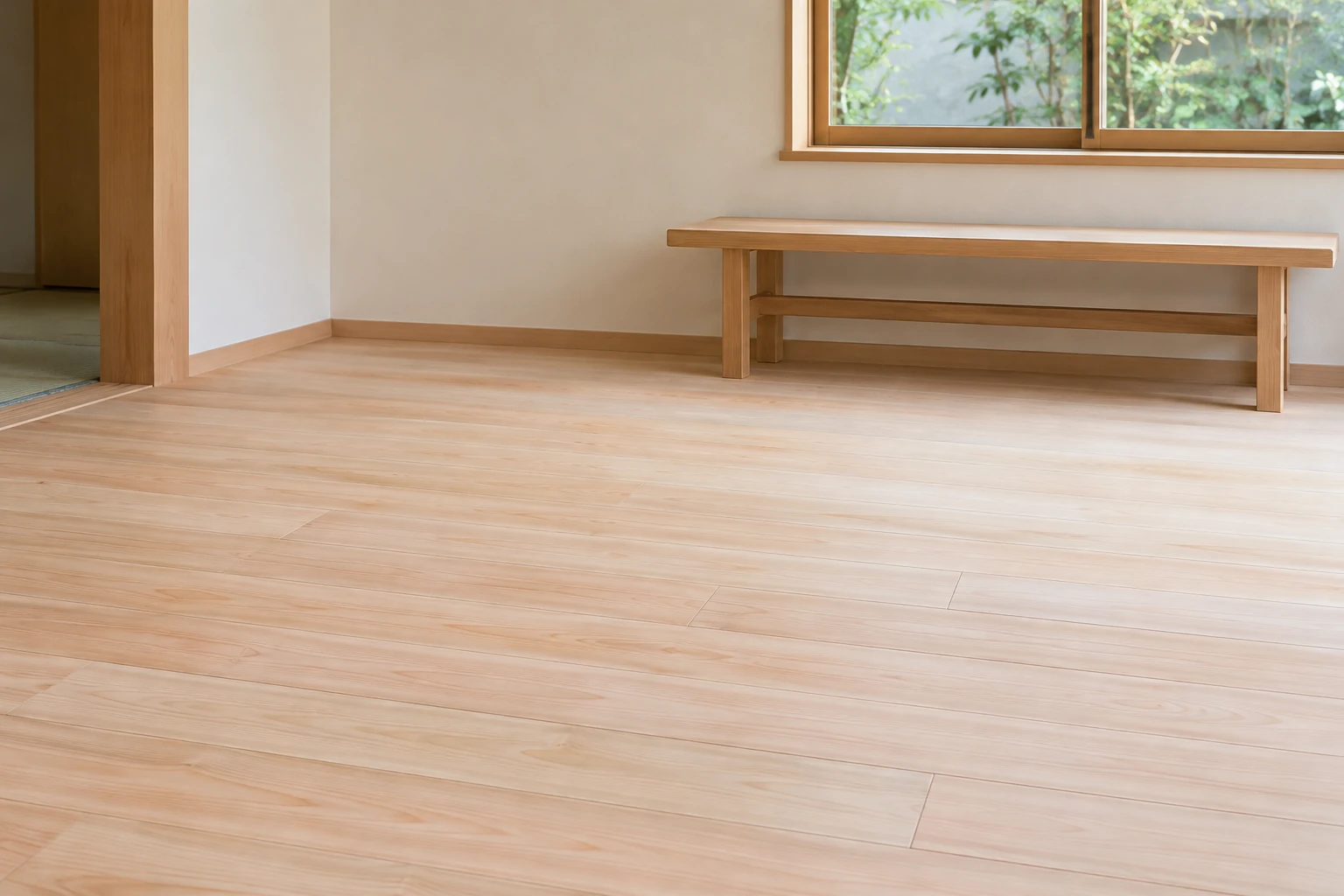
Hinoki flooring offers the natural appeal of wood, including its light color, fine grain, and soft feel underfoot. Depending on the wood’s properties and how the floor is used, however, scratches, dents, and movement caused by changes in humidity may be concerns.
Some of these characteristics can be addressed through wood processing or flooring construction. Considering which performance qualities need to be enhanced, including options that preserve the character of solid wood, can make it easier to choose flooring suited to the material and its intended use.
1. The appeal of hinoki as flooring and properties to consider
Grain, color, and feel underfoot
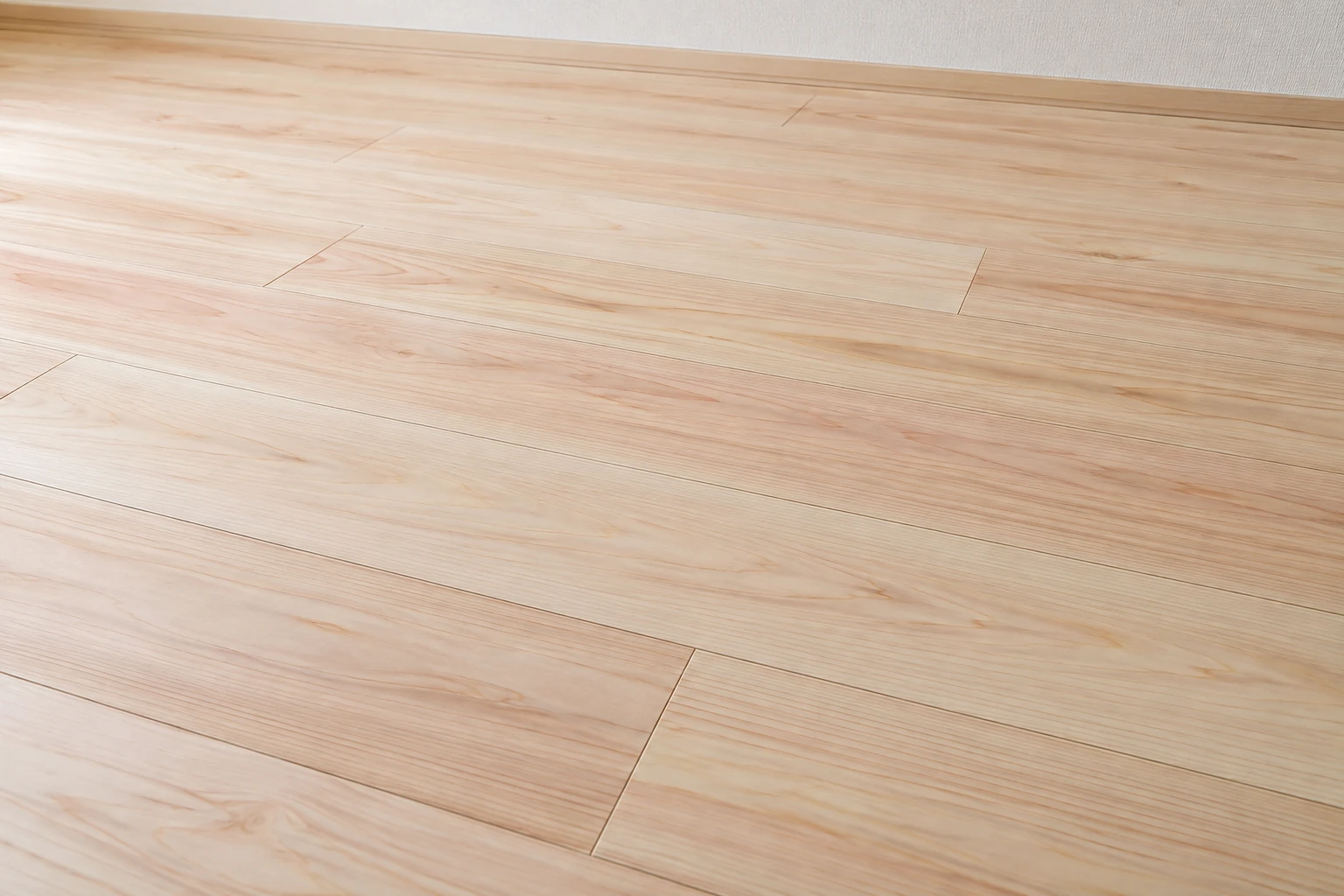
Hinoki has pale pink heartwood, pale sapwood, and a fine, even grain. Its sheen and fragrance, along with the gentle feel of the wood underfoot, are part of its appeal. The grain and color also vary depending on which part of the tree is used.
Scratches, dents, and movement with humidity
Hinoki has a relatively soft surface compared with harder hardwoods. When weight is concentrated under furniture legs or an object is dropped, the floor may dent. Wood absorbs and releases moisture in response to indoor temperature and humidity, so its dimensions also change. Resistance to damage and movement with humidity are different properties; consider each in relation to how the floor will be used.
Comparison with sugi and other woods
Hinoki tends to be harder and less prone to denting than sugi. Sugi draws attention with the color contrast between its reddish heartwood and pale sapwood, as well as its distinct growth rings. Hinoki is valued for its relatively even grain and gentle color. Both woods have their own visual character, but surface hardness and the finished appearance depend on processing and flooring construction as well as species.
2. Processing and finishes for scratches, dents, and dirt
Compression and densification
Compression and densification apply heat and pressure to compress the surface or interior of the wood and enhance its hardness. The treated area and depth vary by process, and some methods densify only the surface. These methods offer a way to enhance dent resistance while showing the grain of hinoki or sugi. Some processes combine densification with resin impregnation.
Resin impregnation (WPC)
Resin impregnation is a process that introduces resin into the wood’s structure. WPC processing for natural wood surface material can enhance performance against scratches and dirt while retaining the character of the wood. Its distinguishing feature is that resin is introduced into the wood structure, rather than forming a film over the surface.
Finishes and coatings
Finishes and coatings protect the surface from dirt and wear. Penetrating finishes such as oil can preserve the feel of the wood, while film-forming finishes cover the surface for protection. The gloss and feel also vary with the coating. Surface protection and the hardness of the wood itself are separate properties, so a coating alone may not prevent deep dents.
3. Processing and material combinations to limit warping and movement
Drying and moisture-content management
Drying the wood and managing its moisture content for the intended use are fundamental when using wood for flooring. Bringing the wood to an appropriate drying condition can help limit dimensional changes after installation. However, wood continues to exchange moisture with its environment and move as temperature and humidity change.
Engineered flooring with a natural wood surface
Engineered flooring is made by bonding a surface material to a substrate. The surface may be a thin board or sheet of natural wood, and the substrate may be plywood or another material. Engineered flooring with a natural wood surface can show the wood grain while using the combination with its substrate to help limit warping and movement.
By contrast, solid wood flooring is made from a single piece of natural wood. Solid versus engineered describes the construction of the flooring as a whole; it is separate from the hardness of the surface. Even with engineered flooring, resistance to dents and scratches varies with the species of the surface material and its finish. Compatibility with underfloor heating also depends on the product’s construction.
Heat treatment
Heat treatment changes how wood responds to moisture by heating it. Treated wood can be less prone to expansion as humidity changes, but its color may become darker. It is used to enhance dimensional stability and has a different purpose from densification, which hardens the surface.
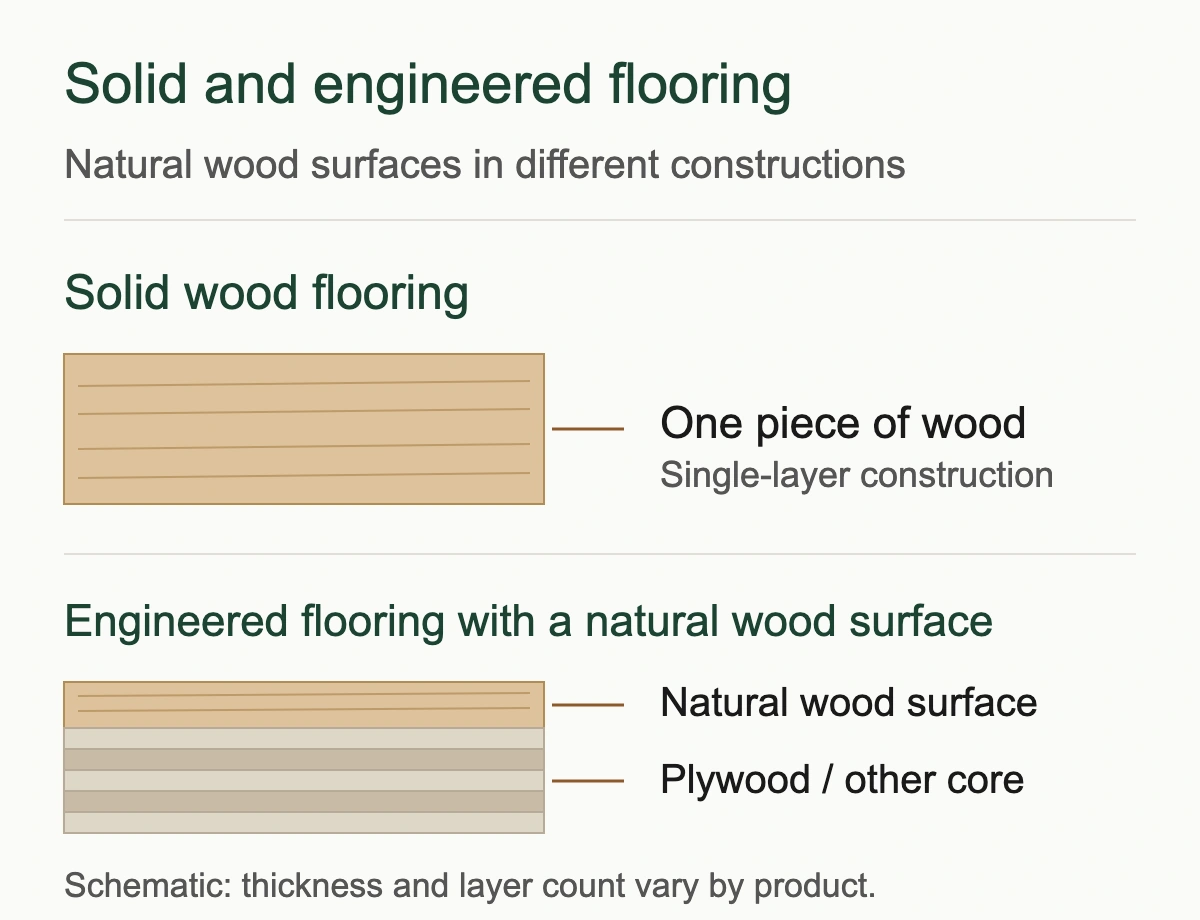
Schematic diagram. Thickness and number of layers vary by product.
4. What processing and engineered construction change—and the character of wood that remains
Effects on color, feel, and fragrance
Processing does not leave every aspect of the wood’s appearance unchanged. Compression or heat treatment may darken its color, while a coating may change its gloss and feel. Resin-impregnated wood may also feel different from the material before processing. If hinoki’s light color, fragrance, or surface feel matters to you, consider the appearance and feel after processing as part of your choice.
You can also choose solid wood and enjoy the wood’s natural properties and changes over time. Processing and engineered construction are options for retaining the character of solid wood while enhancing the performance needed for a particular setting.
Differences in hardness, resistance to damage, and dimensional stability
Surface hardness, resistance to dents, resistance to scratches and dirt, dimensional changes with humidity, and the structural strength of the flooring as a whole are separate performance qualities. A process that hardens the surface does not necessarily improve dimensional stability or structural strength. Consider which properties matter most for the intended use.
Properties addressed by each method and key considerations
| Method or construction | Main role or quality it can retain | Considerations |
|---|---|---|
| Solid wood | Preserves grain, color, and feel | Scratches, dents, and movement with humidity can occur |
| Densification or compression | Hardness of the surface or treated area | The result varies with the treated area and depth, and whether resin is also used |
| Resin impregnation (WPC) | Performance of a natural wood surface against scratches and dirt | Resin impregnation may change the feel and appearance |
| Finish or coating | Protection of the surface from dirt and wear | Separate from the wood’s own hardness and resistance to deep dents |
| Engineered flooring with a natural wood surface | Dimensional stability through combination with a substrate | Surface hardness and underfloor-heating compatibility vary by construction |
| Heat treatment | Limits expansion caused by humidity | The wood may become darker |
These methods can also be combined in the same flooring product. “Solid or engineered” describes the flooring’s construction, while “densified or coated” describes its processing and finish. Considering the surface material, substrate, and finish together makes it easier to weigh the wood’s character against the performance needed.
5. Summary: consider hinoki’s character alongside the performance you need
Hinoki flooring is an option for enjoying light-colored wood, fine grain, and the feel of natural wood underfoot. In addition to using solid wood as it is, processing such as densification or resin impregnation, finishes, combinations with a substrate, and heat treatment can enhance properties for different uses.
Each method addresses different qualities. Resistance to scratches, dents, and dirt, and dimensional stability cannot be compared as a single measure of “strength.” Consider which aspects of the wood’s character you want to retain and which performance qualities the floor needs; this can guide the choice of materials and processing.